
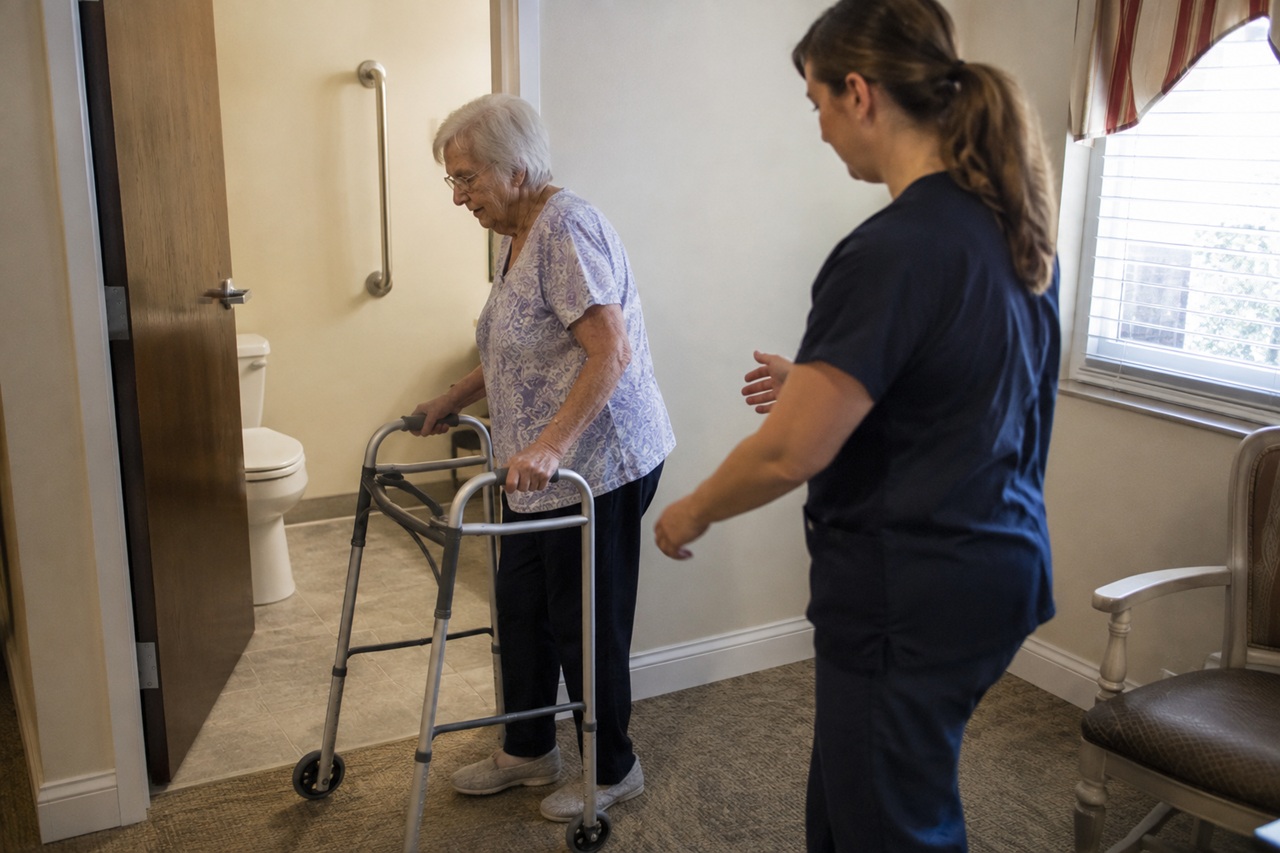
A Fall Doesn't Automatically Mean The Assisted Living Facility Is At Fault
An elderly parent moves into an assisted living community expecting help staying safe while maintaining as much independence as possible. When that person suffers a serious fall, the family is often left with a difficult question: Was this an unavoidable accident, or did the facility fail to provide the care it was supposed to provide?
A Georgia assisted living abuse and neglect lawyer looks beyond the fact that a fall occurred. Liability usually depends on what the facility knew about that particular resident, what assistance the resident required, and whether staff actually provided it.
A resident who safely walks independently and unexpectedly loses their balance presents a very different case from someone who has already fallen several times, needs help transferring, or has a care plan requiring staff assistance before getting out of bed.
At Johnson Greer Law Group, our Georgia assisted living abuse and neglect attorneys investigate that difference. The records created before the fall can be just as important as those from the moments immediately afterward.
3 Questions That Can Determine Liability After An Assisted Living Fall
1. What Did The Facility Know?
Previous falls, mobility problems, cognitive decline, medications, weakness, or difficulty transferring may all put staff on notice that a resident needs additional help.
2. What Care Was Required?
The resident's needs assessment, written care plan, admission agreement, physician orders, and staff instructions may show what supervision or assistance was supposed to be provided.
3. Did The Failure Cause The Fall?
Liability becomes more likely when missing assistance, an unsafe condition, inadequate staffing, or an ignored care instruction can be connected to the resident's fall and resulting injury.
Georgia Requires Assisted Living Facilities To Assess Each Resident's Needs
Georgia's assisted living regulations require facilities to complete a resident needs assessment that considers functional ability, physical care needs, medical information, cognitive and behavioral impairments, family support, and personal care preferences.
The facility must then develop an individualized written care plan within 14 days of admission. That plan has to describe the resident's needs, the services to be provided, and how frequently they will be provided. It must also identify staff responsible for implementing the plan and address physician or other authorized orders involving assistive devices.
The care plan isn't supposed to remain frozen in time. Georgia requires it to be updated at least annually and more frequently when a resident's needs substantially change.
That can become especially important after a fall, hospitalization, new mobility problem, medication change, or noticeable physical or cognitive decline. A facility that continues to follow an outdated plan after a resident's needs have changed may create a very different liability picture than one that promptly reassesses the resident and adjusts the care provided.
Staffing Levels Have To Match The Residents Who Actually Live There
Meeting a minimum staffing ratio doesn't necessarily answer whether an assisted living facility had enough help available for a particular resident.
Georgia regulations expressly require assisted living communities to maintain staffing levels above the minimum ratios when necessary to meet residents' ongoing health, safety, and care needs. Residents must be supervised in a manner consistent with their needs, and sufficient staff time must be available to provide the required assistance with transfers and other care.
That makes understaffing in assisted living facilities particularly important in fall cases. A care plan promising assistance means little if there aren't enough employees available to provide it.
Consider a resident who needs standby assistance when getting up at night. If the resident presses a call button, no one responds because staff is stretched across too many residents, and the resident eventually tries to walk to the bathroom alone and falls, the staffing records may become just as important as the care plan itself.
Unsafe Conditions Can Create A Different Kind Of Fall Case
Not every assisted living fall results from inadequate supervision. Some involve the physical condition of the facility itself.
Georgia requires assisted living communities to keep their interiors and exteriors clean, in good repair, and free from unsafe conditions that could create health or safety risks. Bathrooms used by residents must also have properly installed grab bars and nonskid surfaces or strips in shower and bathing areas.
A wet floor left unattended, broken equipment, unsafe bathroom surface, poorly maintained walkway, or other preventable hazard can therefore create a different path to liability than a failure to follow the resident's individualized care plan.
In practice, the two can overlap. A resident with impaired mobility may be particularly vulnerable to a hazard that would pose less danger to someone else. The facility's knowledge of the resident and its knowledge of the property condition both matter.
Repeated Falls Should Trigger More Questions, Not Fewer
One fall may reveal a risk that wasn't obvious before. A second or third fall can be much harder to dismiss as something nobody could have anticipated.
Georgia regulations require reevaluation when a resident experiences a significant change in physical or mental condition. A pattern of falls, increasing confusion, declining strength, or a new inability to safely perform daily activities may raise questions about whether the existing care plan still meets the resident's needs or whether the facility can continue to care for the resident safely.
The rules go even further. An assisted living community isn't supposed to retain a resident when the person's specific care needs can no longer be met by the staff available there.
That means a case isn't always about whether someone should have prevented one isolated fall. Sometimes the more important question is whether the facility recognized that the resident had reached a point where a higher level of care, additional staffing, or different precautions were necessary.
A Real Example of A Case That Shows Why Reassessment After A Fall Matters
Johnson Greer Law Group reached a $268,750 settlement in an assisted living neglect and wrongful death case involving an 86-year-old resident who experienced increasing confusion, agitation, and physical decline.
The claim alleged that the facility failed to adequately reassess the resident's condition, implement meaningful interventions, update fall precautions, or transfer her to a more appropriate level of care.
After an earlier fall, she later suffered a second catastrophic unwitnessed fall inside her apartment and sustained an acute C6 compression fracture and other injuries. She died several days later, and the cervical fracture and falls were listed among the causes of death.
That result doesn't mean every resident fall establishes negligence or that another case will have the same outcome. It illustrates something more important: what a facility does after the first warning sign can become critical evidence if another fall occurs.
The Facility's Own Records Can Reveal What Went Wrong
Families usually don't have access to all of the information needed to determine why a resident fell. Much of the evidence remains in the facility's possession.
A thorough effort to investigate an assisted living facility may include reviewing:
- Resident Needs Assessments and Care Plans: These can show what the facility knew about mobility, cognition, transfers, and other care needs.
- Prior Fall and Incident Reports: Earlier accidents may reveal a pattern the facility should have addressed.
- Staffing Schedules: Georgia requires facilities to maintain staffing plans and actual work schedules, which can help show who was available when the fall happened.
- Call-System and Response Records: When available, these may help establish whether a resident requested assistance and how quickly staff responded.
- Medication Records: Medication changes or adverse effects may become relevant when dizziness, sedation, weakness, or confusion contributed to the fall.
- Surveillance Footage and Witness Statements: Video or firsthand accounts may contradict an incomplete description of how the resident was injured.
Georgia's regulations also require an assisted living community to immediately investigate the cause of an accident, injury, or death involving a resident. Serious injuries that require medical attention must generally be reported to the Department within 24 hours.
That makes the facility's post-fall documentation especially important. Families should compare what they were told with what the incident report, care records, staffing records, and later medical records actually show.
A Serious Fall Can Become A Wrongful Death Case
Falls can cause hip fractures, head trauma, spinal injuries, internal bleeding, and a rapid loss of mobility in older adults. Sometimes the consequences become even more serious when injuries aren't recognized or treated promptly.
When neglect contributes to a fatal injury, surviving family members may have grounds for an assisted living wrongful death claim.
Families shouldn't assume they have unlimited time to investigate. Many Georgia personal injury claims are subject to a two-year limitations period, and medical malpractice claims also commonly involve a two-year deadline, but the correct deadline depends on the legal claims and circumstances involved. Evidence can become harder to recover long before any filing deadline arrives.
Restoring Dignity, One Family At A Time
A facility may describe a resident's fall as an accident. Our job is to determine whether the records support that explanation.
Our Georgia assisted living abuse and neglect attorneys at Johnson Greer Law Group investigate what the facility knew, what the resident's care plan required, whether staffing was adequate, whether earlier warning signs were ignored, and whether the facility followed Georgia's assisted living regulations.
If your loved one suffered a serious fall in an assisted living facility in Atlanta or elsewhere in Georgia, contact us for a free case evaluation. We handle these cases on a contingency fee basis, so you won't owe an attorney's fee unless we recover compensation for you.
"Attorney Johnson is a true professional who cares about the clients that he represents. He acts with integrity and is very knowledgeable. I would highly recommend [them]." - Darrel and Carla P., ⭐⭐⭐⭐⭐