
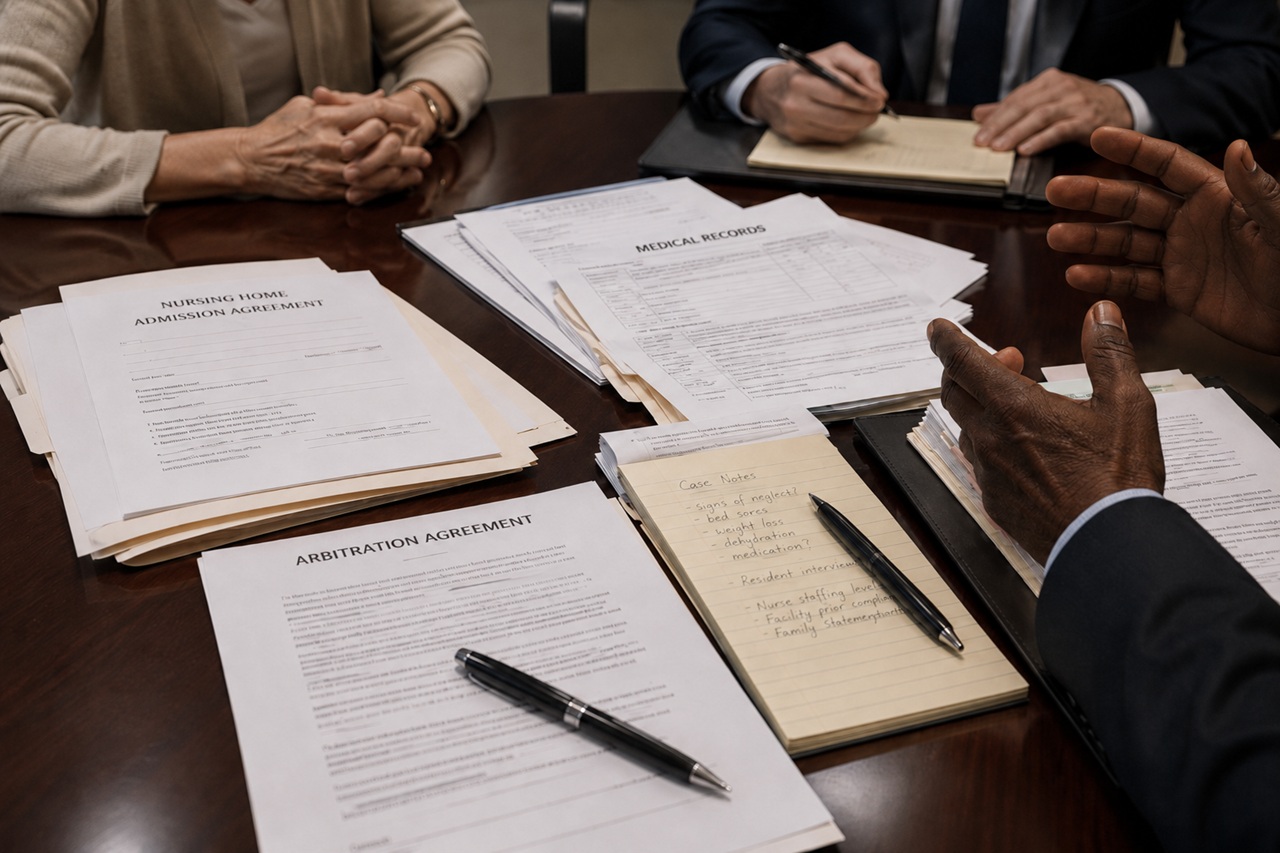
A Nursing Home Arbitration Clause Can Keep Georgia Families Out Of Court
When a loved one is being admitted to a nursing home in Georgia, the paperwork can feel overwhelming. Families are handed stacks of documents at one of the most stressful moments of their lives, and they’re often told the forms are standard. Somewhere in that stack may be an arbitration clause, a provision that can limit a family’s ability to later bring an abuse or neglect case before a judge and jury.
That matters because admission paperwork is not just routine housekeeping. It can affect what happens if a resident suffers nursing home abuse or neglect, serious injury, or death. A Georgia nursing home abuse lawyer can help families understand what they’re being asked to sign before they sign it, and what options may still exist if an arbitration agreement is already in the admission file.
At Johnson Greer Law Group, we help families throughout Atlanta and all of Georgia hold negligent nursing homes accountable. If a facility is trying to use paperwork to shut down your family’s case, we can review the agreement, investigate how it was signed, and explain what can still be done.
What Is A Nursing Home Arbitration Clause?
A nursing home arbitration clause is a contract provision that requires certain disputes to be resolved through private arbitration instead of the court system. When a facility includes one in admission paperwork, it is asking the resident or representative to agree in advance that future claims may go before a private arbitrator rather than a judge and jury.
Arbitration is private. There is no jury, the public usually does not see the evidence, and the ability to appeal can be limited. The arbitrator hears the evidence and issues a decision that may be binding.
Families often do not realize what they agreed to until something has already gone wrong. That can happen after a preventable fall, pressure sore, medication error, assault, choking incident, infection, or death. By then, the nursing home may point to the arbitration page and argue the case cannot proceed in court.
Why Are Nursing Home Arbitration Clauses So Controversial?
Arbitration clauses are controversial because they are often presented during admission, when families are focused on finding care, completing discharge requirements, and getting a loved one safely placed. That is not a normal contract-negotiation setting. It is a crisis moment.
The concerns are especially serious for:
- Families Who Signed Under Pressure: Admission documents may be presented as one packet, creating the impression that every page must be signed immediately.
- Families Who Had Limited Choices: Location, cost, Medicaid or Medicare coverage, bed availability, medical needs, and discharge timing can make it feel like there is no realistic alternative.
- Families Who Were Not Told Signing Was Optional: Federal regulations say certain nursing homes cannot require arbitration as a condition of admission or continued care.
- Families Who Did Not Understand the Clause: If the agreement was not explained in a language and manner the resident or representative understood, that can matter.
- Families Who Later Need Evidence: Arbitration can keep the dispute private, potentially limiting public accountability when a facility has a pattern of neglect.
Understanding how the clause was presented matters because the facts around signing can affect whether the agreement is enforceable.
What Does Federal Law Say About Nursing Home Arbitration?
Federal law does not ban nursing home arbitration clauses outright, but it does place important limits on how Medicare- and Medicaid-certified facilities may use them.
Under 42 CFR § 483.70, a facility that asks a resident or representative to sign a binding arbitration agreement cannot require that signature as a condition of admission or continued care. The facility must also tell the resident or representative that they have the right not to sign.
The same regulation says the agreement must be explained in a form and manner the resident or representative understands, including in a language they understand. It must provide for a neutral arbitrator, a convenient venue, and a right to rescind the agreement within 30 calendar days of signing.
The agreement also cannot discourage the resident, family, or anyone else from communicating with federal, state, or local officials, including state surveyors, health department employees, or the Long-Term Care Ombudsman.
Can A Nursing Home Arbitration Clause Be Challenged In Georgia?
Yes, depending on the facts. Arbitration agreements are contracts. That means they can sometimes be challenged based on ordinary contract issues, including whether a valid agreement was formed, whether the signer had authority, whether the terms were unfair, or whether the facility complied with federal requirements.
The Federal Arbitration Act generally makes written arbitration agreements enforceable, unless there are grounds in law or equity to revoke the contract. The U.S. Supreme Court has also made clear that states cannot single out arbitration agreements for disfavored treatment. That does not mean every nursing home arbitration agreement survives review. It means the challenge has to be grounded in issues that apply to contracts generally.
Common issues may include:
- Authority To Sign: A family member may not have had legal authority to bind the resident to arbitration.
- Capacity: The resident may not have had the ability to understand what was being signed.
- Pressure or Confusion: The agreement may have been presented during a medical crisis or as part of a rushed admission process.
- Failure to Explain the Agreement: The facility may not have explained the clause in a way the resident or representative could understand.
- Missing Rescission Language: The agreement may not clearly give the resident or representative the federal 30-day right to rescind.
- Unfair Terms: The clause may include provisions that are one-sided, costly, confusing, or designed to favor the facility.
These are fact-specific questions. A facility may claim the agreement controls everything. A family may have strong grounds to argue it does not.
What Should Families Know Before Signing?
The best time to deal with an arbitration clause is before it is signed. Families should slow down, separate the arbitration page from the rest of the admission packet, and ask direct questions before agreeing to anything that affects future legal rights.
Before signing, families should know:
- The Arbitration Clause Is Usually Optional: A Medicare- or Medicaid-certified nursing home cannot require arbitration as a condition of admission or continued care.
- Refusing Should Not Affect Care: A facility cannot legally provide worse care because a family refuses to sign an arbitration agreement.
- The Clause Affects Future Claims: Signing may move a future claim for abuse, neglect, injury, or death out of court and into private arbitration.
- There May Be A 30-Day Rescission Right: Federal rules require that the agreement include the right for the resident or representative to rescind within 30 calendar days.
- A Lawyer Can Review The Packet: A quick legal review before signing can prevent major problems if something goes wrong later.
Admission day rarely feels like the right time to push back. But the decisions made in that paperwork stack can affect what is available months or years later if the resident is harmed.
What If Your Family Already Signed?
If your family already signed an arbitration agreement, do not assume the nursing home gets the final word. The agreement should be reviewed carefully before deciding what it means for the case.
Important questions include:
- Who Signed It? The signer’s legal authority can affect whether the agreement binds the resident or family.
- What Did The Power Of Attorney Say? The wording of the document matters, especially if the facility is relying on a representative’s signature.
- Was Signing Presented As Required? Any suggestion that admission depended on signing can raise serious concerns.
- Was The Agreement Explained? The facility should have explained the agreement in a form and language the resident or representative understood.
- Was The 30-Day Rescission Right Included? Missing or unclear rescission language can become important.
- What Claims Are Being Brought? Resident injury claims, estate claims, and wrongful death claims may raise different legal issues.
A signed document is important, but it does not end the analysis. The circumstances around that signature can matter just as much as the signature itself.
Can Arbitration Affect A Wrongful Death Claim?
It can, but these disputes can be complicated. When a resident dies because of abuse or neglect, the nursing home may argue that the arbitration agreement applies to the case. The family may argue that the agreement does not reach every claim or every person with legal rights after the death.
Georgia nursing home cases involving death can require a close review of the arbitration clause, the admission documents, the power of attorney, the estate documents, and Georgia wrongful death law. The answer is not always obvious from the first page the facility points to.
If your loved one died after nursing home neglect, our firm can review whether the agreement affects a wrongful death in a nursing home claim and what options remain.
Does Arbitration Stop Families From Reporting Abuse Or Neglect?
No. An arbitration agreement may affect where a civil claim is heard, but it does not prevent a family from reporting suspected abuse or neglect. The federal arbitration regulation specifically says these agreements cannot discourage communication with federal, state, or local officials.
Families can still report concerns to facility administrators, law enforcement when a crime may have occurred, state regulators, or the Georgia Long-Term Care Ombudsman Program. The Ombudsman Program works to improve the lives of long-term care residents and helps resolve concerns involving nursing homes and other long-term care facilities.
Reporting and a civil claim are different paths. A regulatory complaint may help address unsafe conditions, but a civil claim focuses on accountability and compensation for the harm done to your loved one. If you are unsure where to start, our Georgia elder abuse reporting guidance can help you understand the first steps.
What Evidence Matters When Arbitration Is Raised?
When a nursing home tries to force arbitration, the admission paperwork becomes evidence. The abuse or neglect evidence still matters, but the documents surrounding admission may also decide where the case is heard.
Families should try to save:
- The Full Admission Packet: Keep every page, not just the arbitration agreement.
- Power of Attorney Documents: These may show what authority the signer did or did not have.
- Emails, Texts, and Notes: Messages about admission, discharge pressure, bed availability, or signing requirements can matter.
- Witness Names: Family members or staff who were present during signing may remember what was said.
- Copies of Facility Policies: Any documents that explain arbitration, resident rights, or complaint procedures may be helpful.
- Medical and Care Records: Records involving bedsores, falls, medication errors, infections, or other injuries remain critical to the underlying case.
Our firm knows how to handle investigations of negligent nursing homes, including the facility records, witness accounts, care documents, and contract paperwork that may decide both liability and forum.
If Your Loved One Was Harmed In A Georgia Nursing Home, Talk To Us
If you are dealing with a nursing home arbitration clause after a loved one was abused or neglected in a Georgia facility, you deserve clear answers. The nursing home may want you to believe the agreement ends the conversation. It may not.
Located in Decatur, Johnson Greer Law Group represents families throughout Atlanta and all of Georgia who are fighting for justice after nursing home abuse and neglect. We can review the arbitration agreement, evaluate whether it may be enforceable, investigate the underlying harm, and explain the best path forward. If your family needs to understand the Georgia nursing home abuse lawsuit process, we will walk you through what comes next.
Contact us today for a free case evaluation. We are here to help your family understand what that signature means and fight for the accountability your loved one deserves.
"Attorney Johnson is a wonderful & professional attorney. He is ALWAYS a phone call away; he will continuously update you & your family about your case. Always answer questions & find good solutions to the problems you may have. Very honest & will lead you in the right direction." - Nisha T., ⭐⭐⭐⭐⭐