
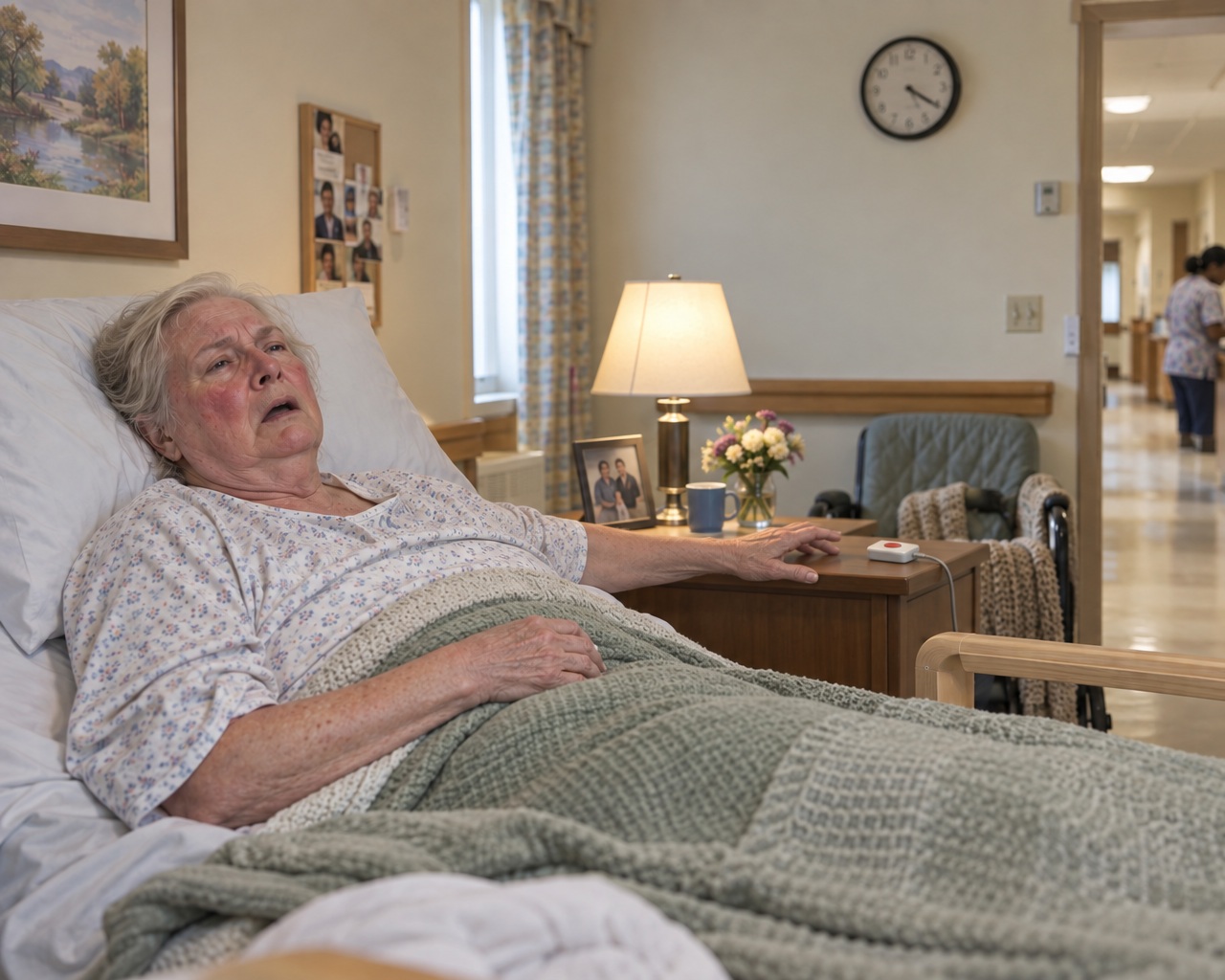
Every Minute of Delay Can Change What Happens Next
A resident's breathing changes. Speech suddenly becomes slurred. Someone who was alert that morning is now confused and difficult to wake. In a nursing home, changes like these can signal a medical emergency that requires immediate assessment and escalation.
Stroke, sepsis, respiratory distress, uncontrolled bleeding, and other serious conditions can become more dangerous when treatment is delayed. But a bad outcome by itself doesn't establish nursing home neglect. The central questions are what signs were present, what staff knew or should have recognized, what they did in response, and whether an unreasonable delay caused additional harm.
Our Georgia nursing home abuse and neglect lawyers at Johnson Greer Law Group investigate those questions by reconstructing the resident's condition, nursing notes, physician communications, emergency records, staffing information, and other evidence showing what happened before the resident finally received hospital care.
Key Takeaways
- Federal rules require certified nursing homes to immediately consult a resident's physician when there is a significant deterioration in physical, mental, or psychosocial condition.
- Georgia nursing homes must have arrangements for medical emergencies and arrange transfer when a resident needs a level or type of care the facility can't provide.
- A delayed hospital transfer isn't automatically negligence. The resident's symptoms, physician orders, care plan, advance directives, and goals of care all matter.
- Successful claims generally require evidence that the delay caused or contributed to additional injury, rather than simply showing that the resident was seriously ill.
- Medical records, nursing notes, vital signs, physician-call logs, EMS records, facility policies, and hospital records can help establish the timeline.
What Does a Nursing Home Have to Do When a Resident's Condition Changes?
Federal law establishes specific responsibilities for Medicare- and Medicaid-certified nursing homes when a resident significantly deteriorates.
Under 42 C.F.R. § 483.10(g)(14), a facility must immediately inform the resident, consult with the resident's physician, and notify the authorized resident representative when there is a significant change in the resident's physical, mental, or psychosocial condition. The rule specifically describes a significant change as deterioration involving life-threatening conditions or clinical complications.
Federal quality-of-care regulations also require treatment and care consistent with professional standards, the resident's comprehensive assessment, and the person-centered care plan.
Georgia imposes additional requirements. Under the state's Rules and Regulations for Nursing Homes, facilities must maintain arrangements for medical emergencies. The rules also provide that when a resident develops a condition requiring a level or type of care the nursing home doesn't provide, the administration must arrange for transfer to an appropriate hospital or other qualified care setting or make satisfactory arrangements for the needed care when appropriate.
The legal issue therefore isn't simply whether staff eventually called an ambulance. It can include whether staff recognized a meaningful change, obtained appropriate medical guidance, followed physician orders and the care plan, and arranged a higher level of care when the resident needed one.
When a Resident Suddenly Deteriorates
- Recognize and Document the Change: Staff should assess meaningful changes in symptoms, vital signs, mental status, breathing, mobility, pain, or other indicators and document what they observe.
- Escalate the Concern: When a significant change occurs, federal rules require immediate physician consultation along with the required resident and representative notifications. The resident's condition may also require emergency medical services.
- Arrange the Appropriate Level of Care: If the resident needs treatment the nursing home can't safely provide, Georgia regulations require arrangements for care at an appropriate setting. Depending on the emergency, that may mean transfer to a hospital.
The exact response depends on the resident's condition, physician instructions, care plan, advance directives, and goals of care.
Which Warning Signs May Require Emergency Evaluation?
Families often look back after a hospitalization and ask what should have caused staff to recognize that something had changed. No single symptom automatically proves that a hospital transfer was required, but some changes warrant urgent medical assessment.
- Sudden Confusion or Altered Mental Status: New disorientation, unusual sleepiness, difficulty responding, or a major change from the resident's normal behavior can accompany infection, stroke, low oxygen, medication problems, or other serious conditions.
- Difficulty Breathing: New shortness of breath, rapid breathing, abnormal oxygen levels, or visible respiratory distress can require immediate intervention.
- Stroke Warning Signs: Sudden facial drooping, one-sided weakness, difficulty speaking, loss of balance, or vision changes require an emergency response. The American Stroke Association advises calling 911 immediately when stroke symptoms appear.
- Possible Sepsis: Confusion, fever or chills, rapid heart rate, weak pulse, shortness of breath, clammy skin, or extreme discomfort can occur with sepsis. Older nursing-home residents may not always develop a fever, making changes from their normal condition particularly important.
- Serious Bleeding or Injury: Uncontrolled bleeding, major trauma, suspected fracture, head injury, or deterioration after a fall may require hospital-level evaluation.
The important comparison is often between the resident's usual baseline and the new condition. The CDC specifically advises long-term care staff to pay attention when a resident suddenly needs more assistance, loses appetite, becomes disoriented, or otherwise appears different from their normal state.
Why Sepsis Shows How Important a Timely Transfer Can Be
Sepsis provides a particularly clear example of why changes in condition can't simply be watched indefinitely.
The CDC's 2026 guidance for long-term care residents explains that an estimated 1 to 3 million serious infections occur in long-term care settings each year. Older age and chronic medical conditions can increase both infection and sepsis risk.
Sepsis can also be difficult to recognize in older adults. A resident may become confused, weak, less interested in food, or simply appear unlike their usual self rather than developing the classic symptoms a younger person might experience.
The CDC notes that most long-term care residents suspected of developing sepsis will need to be transferred quickly to a hospital for intensive evaluation and treatment, consistent with the resident's goals of care.
Current 2026 Surviving Sepsis Campaign guidelines recommend antimicrobial treatment immediately, ideally within one hour of recognition, for septic shock and for probable or definite sepsis without shock. When sepsis is only possible and there is no shock, the guidelines recommend rapid investigation and treatment within three hours if concern for bacterial infection persists.
That's more precise than simply saying every suspected infection has a universal one-hour treatment window. The resident's clinical condition determines the appropriate response.
Not Every Decision to Keep a Resident at the Facility Is Neglect
Hospital transfer isn't always the right medical decision.
A resident may have a documented advance directive, hospice plan, or other goals of care that prioritize comfort rather than hospitalization. A physician may also determine after appropriate evaluation that the resident can safely receive the necessary treatment at the nursing home.
A do-not-resuscitate order or other advance directive shouldn't be assumed to mean the resident never receives hospital care. The actual language of the resident's medical orders and care preferences matters.
For that reason, a nursing-home neglect case shouldn't be built around hindsight alone. The question is whether the response was reasonable based on the resident's symptoms, medical history, physician instructions, care plan, goals of care, and the information available to staff at the time.
How Can a Delay Cause Additional Harm?
Showing that staff should have responded sooner is only part of a negligence case. The family may also need medical evidence establishing that the delay caused or contributed to a worse outcome.
That distinction can become difficult when a resident was already seriously ill.
For example, a resident may have developed sepsis from pneumonia before staff could reasonably recognize what was happening. The existence of sepsis alone doesn't prove negligence. A claim based on delayed transfer may instead require evidence that earlier recognition and treatment probably would have prevented or reduced organ damage, hospitalization, surgery, disability, pain, or death.
The same issue can arise after a stroke. The American Stroke Association emphasizes that stroke treatment is highly time-sensitive because brain tissue can be lost as treatment is delayed. But whether a particular nursing-home delay changed an individual resident's outcome usually requires medical analysis of the type of stroke, symptom onset, treatment eligibility, and resulting injury.
Which Records Can Reveal What Happened?
Delayed-transfer cases often become timeline cases. The records can show when the resident first changed, who knew about it, when a physician was contacted, and when emergency treatment finally began.
- Nursing Notes: These may document new confusion, breathing difficulty, fever, weakness, pain, bleeding, falls, or other changes.
- Vital-Sign Records: Blood pressure, pulse, temperature, respiratory rate, and oxygen saturation can help show how the resident's condition changed over time.
- Physician and Provider Communications: Records may identify when a physician, nurse practitioner, or physician assistant was contacted and what instructions were given.
- Medication and Treatment Records: These records can establish what treatment was provided before the transfer and whether physician orders were carried out.
- EMS Records: Ambulance documentation may describe the resident's condition when emergency personnel arrived and what staff told them about the timeline.
- Hospital Records: Emergency-department and inpatient records can help establish the diagnosis, severity of illness, and whether earlier treatment probably would have changed the outcome.
- Facility Policies: Written procedures governing changes in condition, physician notification, emergency response, and hospital transfer may provide additional evidence about the procedures staff were expected to follow.
- Staffing Records: In some cases, staffing logs may help explain who was responsible for monitoring the resident and what personnel were available during the critical period.
A facility's policy isn't automatically the legal standard of care, and violating an internal rule doesn't by itself prove negligence. But those materials can become part of the larger factual picture when compared with medical evidence, regulations, and professional standards.
What Can Families Do After a Delayed Hospital Transfer?
Families usually begin with only pieces of the timeline. Several practical steps can help preserve the information needed to understand what happened.
- Request the Medical Records: Obtain the nursing-home chart along with hospital and EMS records. These records can establish the sequence of symptoms, communications, and treatment.
- Write Down What the Family Observed: Record dates, conversations, symptoms, names of staff members, and anything the resident or family was told while those details remain fresh.
- Preserve Communications: Keep text messages, portal messages, voicemails, photographs, emails, and other communications involving the resident's condition or the facility's response.
- Consider a Regulatory Complaint: Families concerned about care can file a complaint with the Georgia Department of Community Health's Healthcare Facility Regulation Division, which regulates nursing homes and accepts complaints involving resident health, safety, and quality of care.
- Have the Timeline Reviewed: A lawyer and appropriate medical professionals can evaluate whether the response fell below an applicable standard and whether the delay caused additional harm.
If the resident remains in the facility and there is an immediate medical emergency, protecting the resident's health takes priority over preserving evidence. Call 911 or obtain emergency medical assistance when necessary.
How Long Do Georgia Families Have to Bring a Claim?
There isn't one simple filing rule that can safely be applied to every Georgia nursing-home case.
Georgia courts distinguish between ordinary negligence and professional negligence. Conduct involving professional medical judgment can be treated as professional malpractice, while administrative, clerical, routine, or other conduct not requiring professional judgment may support an ordinary-negligence claim.
For medical-malpractice claims, O.C.G.A. § 9-3-71 generally requires an action to be brought within two years after the injury or death arising from the negligent act or omission and establishes a five-year statute of repose, subject to other statutory provisions and exceptions.
Other claims can involve different accrual, tolling, notice, or procedural rules. Professional-negligence allegations may also trigger Georgia's expert-affidavit requirement.
Because the classification of the claim can affect both the filing deadline and what must accompany the lawsuit, families shouldn't wait until the end of an assumed two-year period before having the facts reviewed.
Johnson Greer Law Group Can Reconstruct the Timeline
When a resident reaches the hospital critically ill, families are often left trying to understand what happened during the hours or days before the transfer.
At Johnson Greer Law Group, we can obtain the nursing-home chart, hospital records, EMS documentation, staffing information, and other evidence needed to reconstruct that period and determine whether the resident's condition should have been escalated sooner.
Our case results include a $270,000 recovery involving nursing home and hospital neglect and a $175,000 nursing home neglect and wrongful death settlement involving pressure wounds, infection, sepsis, gangrene, malnutrition, and other serious complications. Every case depends on its own facts, medical evidence, causation, damages, and available sources of recovery.
If you believe a Georgia nursing home waited too long to obtain emergency medical treatment for someone you love, contact Johnson Greer Law Group for a free case evaluation. We can help determine what happened, whether the delay caused additional harm, and what legal options may be available.
"From our first meeting, Mr. Johnson's professionalism, integrity, honesty, and compassion were evident. His deep understanding of the law, coupled with his genuine concern for my family's well-being, reassured me that my father's legacy would be protected. Months later, as the case reached its conclusion, I knew without a doubt that I had chosen the right legal team. I am truly grateful for the dedication and expertise of Johnson Greer Law Group." - Anthony E. H., ⭐⭐⭐⭐⭐