
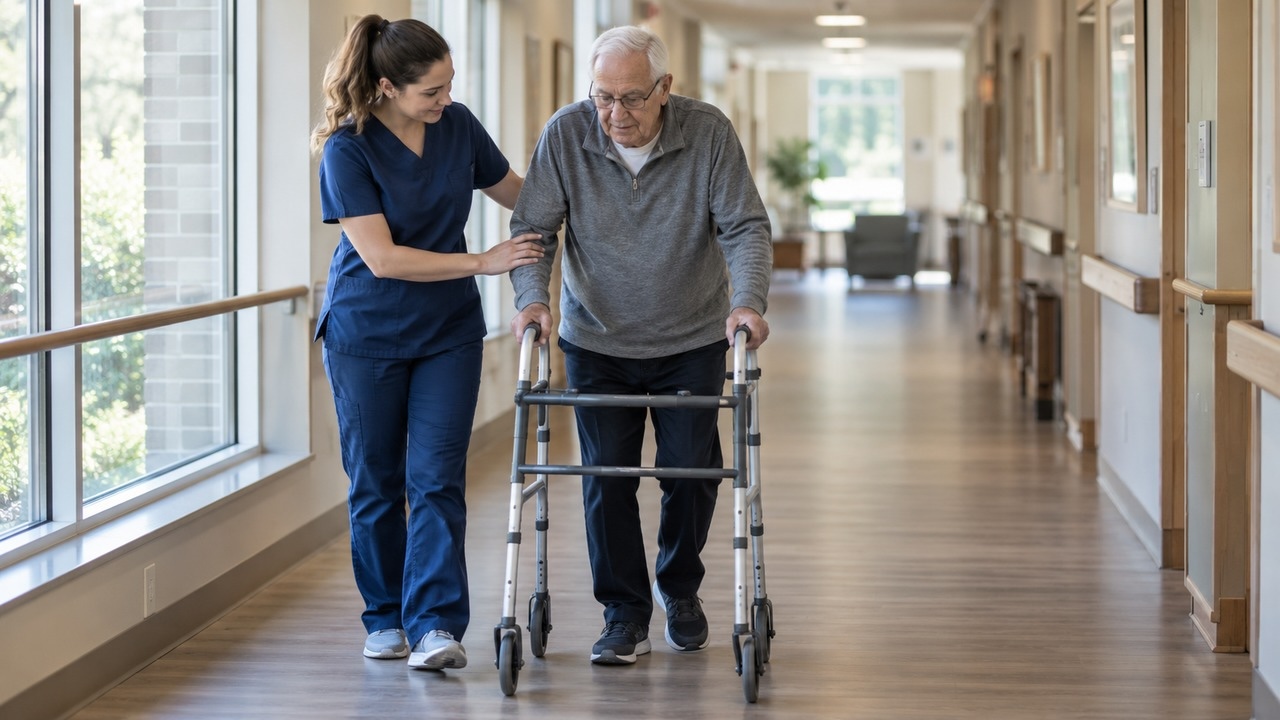
Most Short-Term Rehab Stays Fall Under the Same Federal Rules as Nursing Homes, but Not Every Rehab Facility Does
Short-term rehab in Georgia usually takes place inside a skilled nursing facility, often in the same building as long-term nursing home residents. Patients arrive after a hip replacement, a stroke, a serious infection, or another hospital stay, expecting a few weeks of therapy before going home. When that care breaks down, families may wonder whether the facility can be held accountable the same way as a Georgia nursing home.
In most cases, the answer is yes. A rehab wing inside a skilled nursing facility generally has to follow the same federal and Georgia rules as the rest of the building. But some patients go to an inpatient rehabilitation facility instead, which is regulated more like a hospital. Knowing which type of facility provided care shapes how you build a neglect claim.
At Johnson Greer Law Group, our Georgia nursing home neglect lawyers review admission records, therapy notes, and care plans to determine which rules applied to a patient's stay. A short stay can still leave lasting harm, and we work to restore dignity to families when a facility fails someone who was supposed to be getting stronger.
|
Key Findings
|
What Counts as a Short-Term Rehab Center in Georgia?
"Short-term rehab" isn't a separate license category. It's usually a description of the type of stay. Most patients who need rehab after a hospital discharge go to a skilled nursing facility, sometimes called a SNF. These facilities provide nursing care and physical, occupational, or speech therapy, often in a dedicated rehab wing.
Other patients go to an inpatient rehabilitation facility, sometimes called an acute rehab center or rehabilitation hospital. These facilities are designed for patients who need intensive therapy and close physician supervision. The facility's name on the sign doesn't always make the difference clear, so the admission paperwork matters.
Do Nursing Home Rules Apply to Short-Term Rehab Patients?
When the rehab stay is in a skilled nursing facility, the answer is generally yes. Under 42 C.F.R. § 483.1, the federal long-term care requirements apply to facilities participating in Medicare as skilled nursing facilities and in Medicaid as nursing facilities. The same standards cover a two-week rehab patient and a resident who has lived there for years.
Georgia adds its own layer. The state's Rules and Regulations for Nursing Homes govern licensed nursing homes in Georgia, including their rehab units. A facility can't lower its standards because a patient is expected to leave soon. If anything, the transition from hospital to rehab is a high-risk period that calls for close attention from the first day.
Federal Rules That Matter Most During a Short Rehab Stay
Several federal requirements carry extra weight when a patient is only expected to stay a few weeks. These rules help show what the facility should have done from admission through discharge.
- Baseline Care Plan Within 48 Hours – Under 42 C.F.R. § 483.21, the facility must create a baseline care plan within 48 hours of admission and give the family a summary.
- Physician Visits – Under 42 C.F.R. § 483.30, a physician must see the resident at least once every 30 days for the first 90 days.
- Fall Prevention – Under 42 C.F.R. § 483.25, facilities must provide supervision and assistance devices to prevent accidents. Rehab patients learning to walk again often need hands-on help.
- Pressure Injury Prevention – Patients recovering from surgery may spend long hours in bed or a wheelchair, which raises the risk of bedsores without repositioning.
- Discharge Planning – The care plan must address the patient's goals for returning home, including the therapy and support needed to get there safely.
The 30-day physician visit rule surprises many families. A rehab patient can go through much of a short stay without a doctor at the bedside, which makes nurses and therapists responsible for spotting problems early. When staff miss a change in condition, the gap in physician oversight can turn a manageable issue into a serious injury.
How Inpatient Rehabilitation Facilities Are Different
Inpatient rehabilitation facilities operate at a hospital level of care. Under 42 C.F.R. § 412.622, federal rules generally require face-to-face visits from a rehabilitation physician at least three days a week. Patients also need to be able to take part in an intensive therapy program. That level of oversight is far greater than what a skilled nursing facility must provide.
Because these facilities are regulated more like hospitals, a claim involving one may look more like a hospital injury case than a nursing home case. Hospital-level care brings different staffing expectations and different rules for physician involvement. The table below compares the two rehab settings with long-term nursing home care.
| Setting | Main Rules That Apply | Physician Oversight |
|---|---|---|
| Short-term rehab in a skilled nursing facility | Federal long-term care rules and Georgia nursing home rules | At least every 30 days for the first 90 days |
| Long-term nursing home care | Federal long-term care rules and Georgia nursing home rules | At least every 30 days for the first 90 days, then every 60 days |
| Inpatient rehabilitation facility | Hospital-level rules and federal rehab facility requirements | Face-to-face rehab physician visits at least three days a week |
When Rehab Injuries Point to Neglect
Rehab patients are often unsteady, weak, and on new medications, which is why the care plan matters from day one. It should flag fall risks, repositioning needs to prevent bedsores, and medications that need monitoring. When staff skip those steps, an injury is often predictable rather than accidental.
Our case results include a $299,995 settlement for a short-term rehab patient who was flagged as a high fall risk. He was allegedly left unattended in his wheelchair and fell, fracturing his hip and derailing his recovery. As with many nursing home falls, the facility knew the risk and didn't act on it.
Restoring Dignity When a Rehab Stay Goes Wrong
A rehab stay should bridge the way back home. When a facility ignores its own care plan, leaves a fall-risk patient unattended, or misses signs of decline, that bridge can collapse. Our attorneys know how to analyze records and hold rehab facilities to the standards they're required to meet.
If someone you love was hurt during a short-term rehab stay in Georgia, contact our law firm for a free case evaluation. We can review the admission records, care plan, and therapy notes to determine whether the facility met its obligations and what legal options your family may have.
"He seemed to know what I was living through, and what questions to ask. He was very up front about the difficulty of winning these cases. His strength helped us go the distance to win our case. He was able to tell us what the law would allow, and he was also very experienced with Medicare and the bills we would face." — P.K., ⭐⭐⭐⭐⭐